5 Axis Milling Cost Drivers to Check Before Quoting
Before approving a supplier quote, cost reviewers need to understand what truly drives 5 axis milling costs, especially for precision components used in cleanroom, HVAC, UPW, biosafety, and smart environmental systems. Material selection, machine time, tolerance requirements, surface finish, inspection standards, and batch volume can all change pricing significantly. This guide highlights the key cost drivers to review before requesting or comparing quotes, helping reduce surprises, improve supplier communication, and secure better value without compromising technical performance.
What makes 5 axis milling different from simpler CNC pricing?
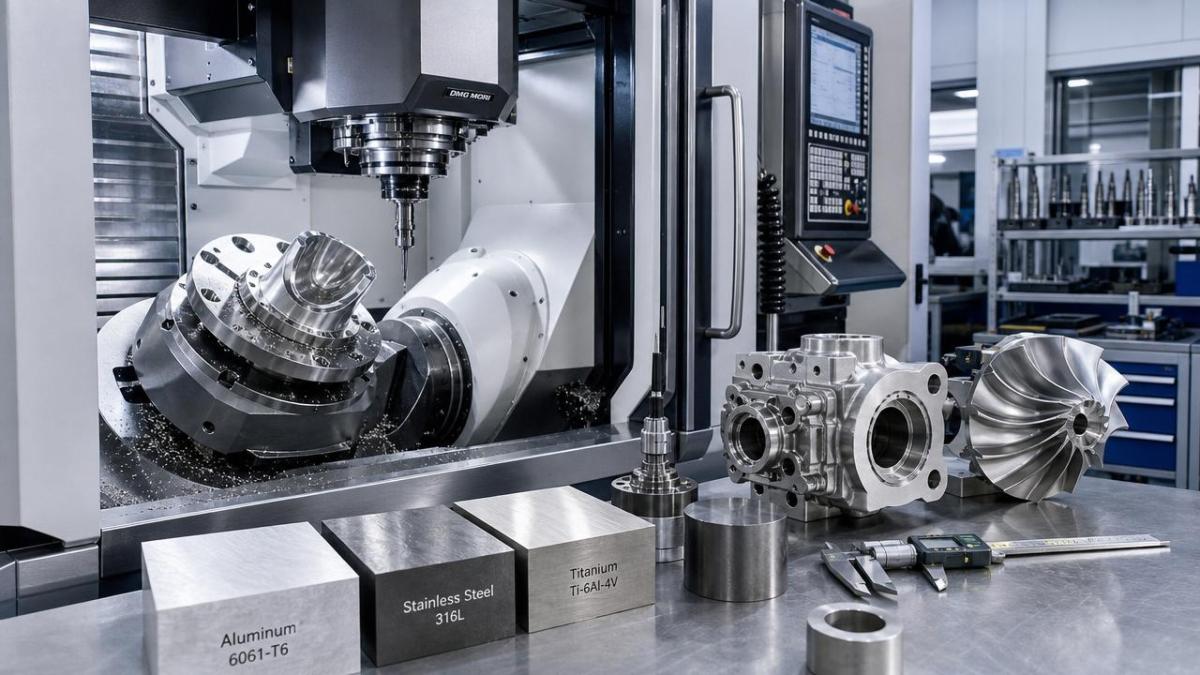
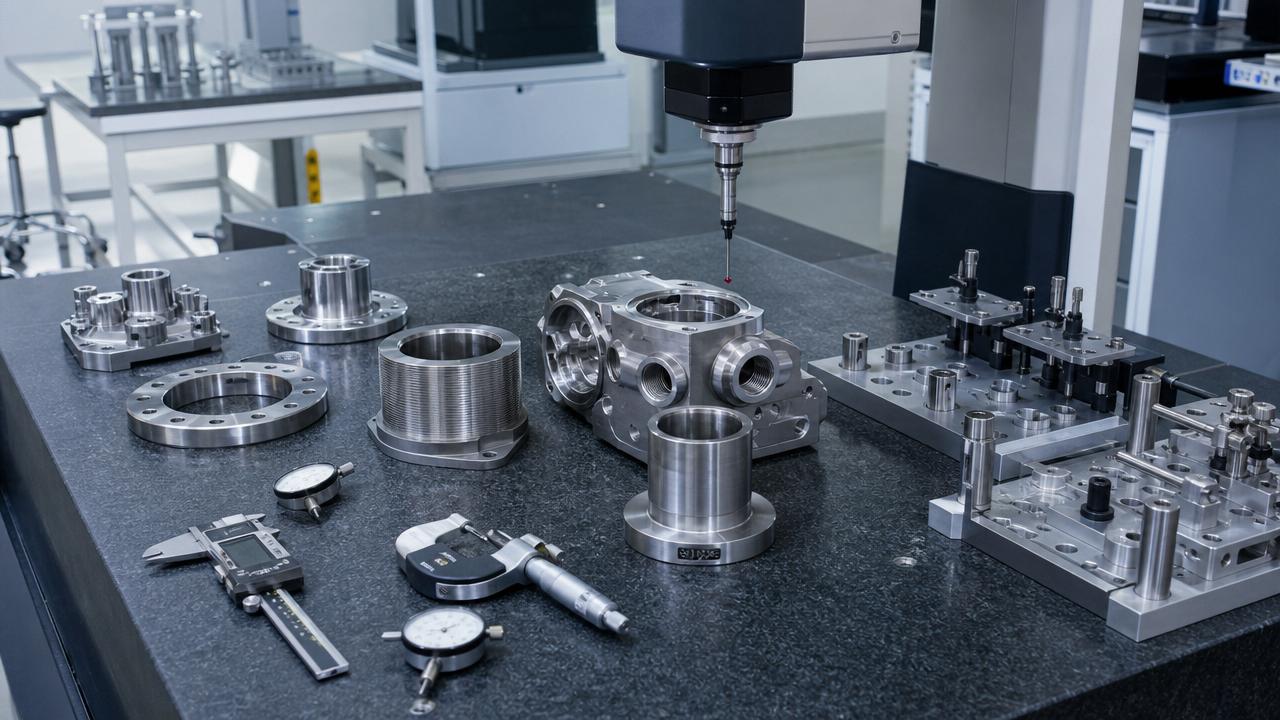
5 axis milling allows a cutting tool to approach a part from multiple angles in one setup.
That capability reduces repositioning, improves feature alignment, and supports complex geometries that 3-axis machining may struggle to reach.
However, 5 axis milling pricing is not simply a higher machine-hour rate.
Costs reflect programming, fixture strategy, tool access, collision control, inspection planning, and operator skill.
In industrial climate and contamination-control systems, this matters because parts often combine airflow, sealing, and alignment functions.
Examples include impellers, valve bodies, sensor housings, manifolds, chamber fittings, and precision mounting interfaces.
A quote that looks expensive may include risk control for tight datum relationships or contamination-sensitive surfaces.
A cheaper quote may exclude deburring, documentation, passivation, or dimensional reports required for regulated environments.
The first question is whether the part truly needs 5 axis milling for value, not only for manufacturability.
- Use 5 axis milling when multiple angled features must remain aligned.
- Use it when fewer setups reduce cumulative tolerance error.
- Use it when surface continuity affects flow, sealing, or cleaning.
- Question it when the part is simple, flat, or loosely toleranced.
How does material choice change 5 axis milling cost?
Material is usually the first visible cost driver, but its machining behavior matters more than raw price alone.
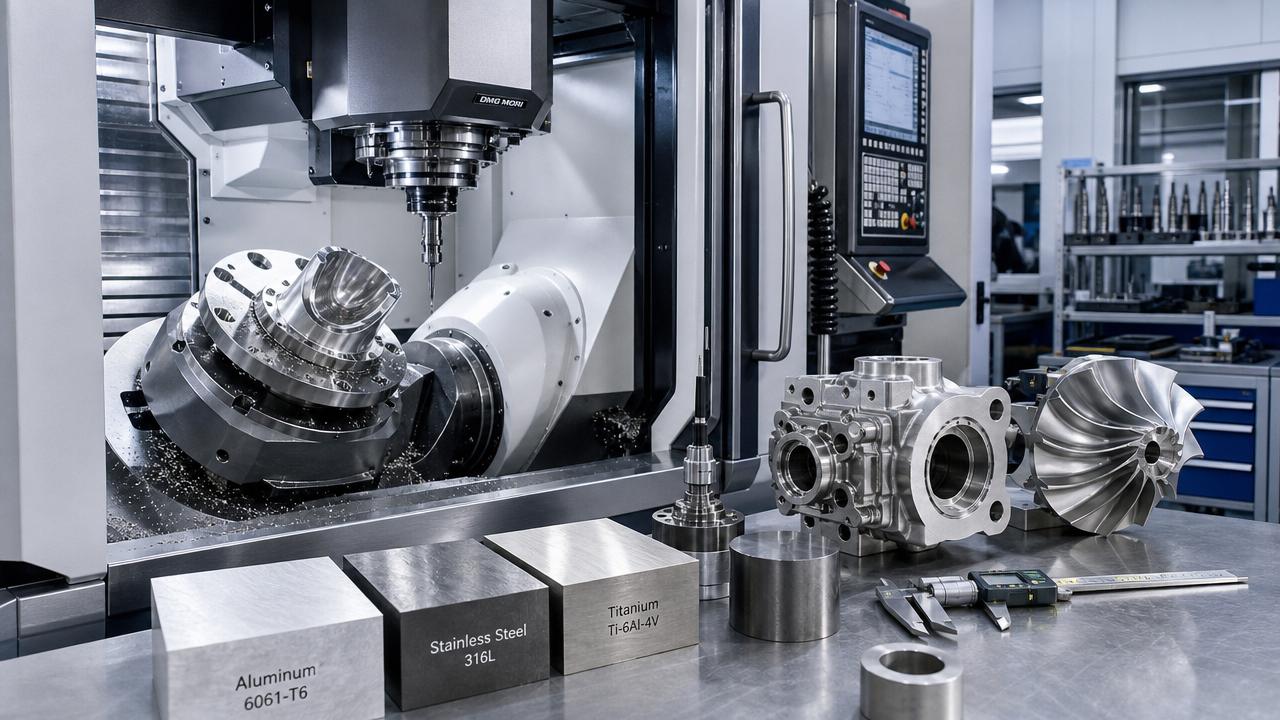
Aluminum machines quickly, supports fine finishes, and suits many HVAC, enclosure, and instrumentation components.
Stainless steel is common in UPW, biosafety, and cleanroom applications, but it increases tool wear and cycle time.
Titanium, Inconel, and specialty alloys raise 5 axis milling costs because heat control becomes harder.
Polymers such as PEEK or PTFE may appear easier, yet they can deform under clamping or heat.
Material certificates, traceability, and lot control can also influence quote structure.
For contamination-control hardware, the wrong material can create particle, corrosion, or outgassing risks.
That makes 5 axis milling decisions inseparable from the operating environment.
What should be clarified before quoting material?
- Required grade, not only material family.
- Surface contact with UPW, chemicals, air, or biological agents.
- Need for mill certificates or full traceability.
- Heat treatment, stress relief, passivation, or anodizing requirements.
- Blank size, material yield, and scrap allowance.
A clear material specification prevents the supplier from pricing a different risk level than the application requires.
Which geometry features increase machine time and programming effort?
Geometry often determines whether 5 axis milling is efficient or expensive.
Deep pockets, thin walls, undercuts, freeform surfaces, and intersecting bores can extend cycle time significantly.
Small internal radii also force smaller tools, slower feed rates, and more toolpath passes.
For environmental monitoring devices, compact housings often include sensor ports, cable channels, and sealing grooves.
For precision HVAC and thermal systems, impellers and flow components require smooth transitions and balanced geometry.
5 axis milling can produce these features, but complexity must be visible in the quote package.
Which design details commonly raise price?
- Very thin ribs that vibrate during cutting.
- Deep cavities requiring long tools.
- Sharp internal corners with no functional need.
- Tight positional tolerances across multiple angled faces.
- Complex freeform profiles requiring advanced CAM simulation.
A design-for-machining review can reduce 5 axis milling cost without weakening the part.
Increasing a non-critical radius may allow a stronger tool and shorter cycle.
Relaxing a hidden surface finish may also cut finishing time.
How do tolerances, surface finish, and cleanliness requirements affect quotes?
Tolerances are among the most misunderstood 5 axis milling cost drivers.
A tight tolerance on one critical sealing face may be reasonable.
The same tolerance applied everywhere can make the quote unnecessarily expensive.
Precision industrial systems often require accurate interfaces, but not every cosmetic or clearance feature needs micron-level control.
Surface finish adds another layer.
A smoother finish may be needed for O-ring grooves, wet surfaces, airflow paths, or cleanability.
Yet polishing, bead blasting, electropolishing, and special cleaning all add process steps.
Cleanroom or biosafety applications may also require particle control, sealed packaging, and compatible cleaning agents.
Those requirements should be written into the RFQ, not discussed after machining.
What is the practical way to control tolerance cost?
- Separate functional dimensions from general dimensions.
- Define datum structure clearly on the drawing.
- Avoid default tight tolerances across the entire model.
- Specify finish only where performance requires it.
- State inspection standards before supplier quotation.
This approach keeps 5 axis milling focused on critical performance, rather than over-controlling every surface.
What inspection, documentation, and compliance items should be priced?
Inspection can be a small line item or a major part of 5 axis milling cost.
The difference depends on risk, industry standards, and evidence required after delivery.
A simple dimensional check may be enough for a bracket or prototype housing.
Critical components may require CMM reports, first article inspection, material certification, and process records.
For systems aligned with ISO 14644, ASHRAE, SEMI, or internal validation rules, documentation can be essential.
Inspection effort rises when geometry is complex and datum access is limited.
5 axis milling may reduce setup errors, but it does not remove the need for verification.
Which quote lines should not be overlooked?
- FAI or PPAP-style documentation, if required.
- CMM programming for complex surfaces.
- Surface roughness measurement and reporting.
- Cleaning, passivation, or packaging validation.
- Serialization, labeling, and traceability records.
If these items are missing, a low 5 axis milling quote may not reflect the real delivered requirement.
How do batch volume, lead time, and supplier capability influence the final price?
Batch size changes how setup, programming, and fixture costs are distributed.
A single prototype absorbs nearly all preparation cost into one part.
A production batch spreads those costs across more units, lowering unit price.
However, larger batches may require process control, tool-life planning, and additional inspection sampling.
Lead time also affects 5 axis milling pricing.
Urgent schedules can require overtime, machine reshuffling, expedited material, or premium finishing slots.
Supplier capability is equally important.
An experienced shop may quote higher but reduce rework, delays, and quality disputes.
For high-spec industrial infrastructure, lowest price rarely equals lowest total cost.
What should a complete RFQ package include?
- 3D model and controlled 2D drawing.
- Material grade, condition, and certification level.
- Critical tolerances, datums, and inspection points.
- Surface finish, cleaning, and packaging instructions.
- Expected annual volume and first delivery requirement.
- Any standards linked to cleanroom, UPW, biosafety, or thermal systems.
A complete package gives every supplier the same basis for 5 axis milling pricing.
It also makes quote comparison more objective and less dependent on assumptions.
Summary: how to compare 5 axis milling quotes with confidence
5 axis milling cost is driven by more than machine time.
Material behavior, geometry, tolerances, surface condition, inspection depth, documentation, and schedule all influence the final price.
For precision components in cleanroom, HVAC, UPW, biosafety, and monitoring systems, these factors directly affect reliability.
Before comparing quotes, check whether each supplier included the same technical scope.
Ask for assumptions in writing, especially around inspection, finishing, cleaning, and packaging.
Then review whether design changes could reduce 5 axis milling cost without compromising function.
The best next step is to prepare a structured RFQ checklist before sending drawings.
That checklist should define material, geometry risks, critical tolerances, finish levels, documentation, volume, and delivery timing.
With clear requirements, 5 axis milling becomes easier to price, easier to compare, and safer to approve.
Get weekly intelligence in your inbox.
No noise. No sponsored content. Pure intelligence.
 Jun 01, 2026Market Intelligence Reports: Signals That Support 2026 Expansion PlansMarket Intelligence Reports reveal the technical, regulatory, and ESG signals leaders need to plan resilient 2026 expansions with lower risk and stronger ROI.
 Jun 01, 2026Matter Compatible Devices: Setup Risks in Mixed Smart HomesMatter compatible devices can simplify mixed smart homes, but setup risks remain. Learn how to avoid pairing issues, network gaps, feature limits, and automation conflicts.
 Jun 01, 2026USB C Docking Stations: Power Delivery Limits to Check FirstUSB C docking stations can make or break workstation stability. Learn the key power delivery limits to check before buying for safer, smoother daily operation.
 Jun 01, 2026Healthcare Analytics in 2026: Data Quality Checks Before DeploymentHealthcare Analytics in 2026 demands trusted data before deployment. Learn key quality checks for completeness, traceability, compliance, and safer go-live decisions.
 Jun 01, 2026OEM Machined Parts: Tolerance Risks That Raise Assembly CostsOEMmachinedparts tolerance risks can drive rework, delays, and hidden assembly costs. Learn how to control specs, suppliers, and sourcing decisions.
 Jun 01, 2026China Excludes UPW Regeneration Modules from Hazardous Waste RulesChina exempts UPW regeneration modules from hazardous waste rules—key update for semiconductor suppliers, fabs & logistics firms. Learn implications & compliance steps.
 Jun 01, 2026Blue Bee Expo 2026: Maglev Chiller Export Orders Surge 210%; ±0.01°C Control Now Key EU/US Procurement CriterionBlue Bee Expo 2026: Maglev chiller export orders surge 210%; ±0.01°C control & Digital Twin validation now mandatory for EU/US tenders.
 Jun 01, 2026ECHA Updates SCIP Rules: AMC Filtration Exporters Must Disclose Regeneration ParametersAMC filtration exporters must now disclose adsorbent regeneration parameters in SCIP submissions—key for EU compliance. Act before 1 July 2026.
 Jun 01, 2026IEC Revises IEC 60335-2-102: New Mandatory Real-Time Calibration for IIoT Air Monitoring in Class 1–9 SystemsIEC 60335-2-102 revision mandates real-time IIoT air monitoring calibration for Class 1–9 cleanroom systems—act now to ensure compliance, certification & market access.
 Jun 01, 2026FDA Tightens Import Rules for BSL-3/4 Decon SystemsFDA tightens import rules for BSL-3/4 decon systems: Full-cycle biological validation now mandatory for U.S. market access—act before May 30, 2026.
 May 31, 2026Corrugated Plastic Boxes for Retail Packaging: When to Use ThemCorrugated plastic boxes for retail packaging offer durable, reusable, moisture-resistant solutions. Learn when they outperform cartons and how to choose the right design.
 May 31, 2026OEM Machined Parts: Tolerance Risks to CheckOEM machined parts can hide tolerance risks that cause leaks, vibration, contamination, or compliance issues. Learn key checks before supplier approval.
 May 31, 2026Solar Panels Wholesale Cost Guide 2026Solar panels wholesale cost guide for 2026: compare pricing, landed costs, certifications, and supplier risks to buy smarter and protect long-term ROI.
 May 31, 2026Medical Grade Silicone: Key Safety ChecksMedical grade silicone safety checks for QC teams: verify compliance, traceability, compatibility, and performance to reduce contamination risk and downtime.
 May 31, 2026How to Size Fan Filter Units for ISO CleanroomsFan Filter Units sizing guide for ISO cleanrooms: learn how to balance airflow, coverage, pressure, heat load, and energy cost for reliable contamination control.
 May 31, 2026Blue Bee Expo Nanjing 2026 Closes: Maglev Chillers See 210% Overseas Order GrowthMaglev chillers drive 210% overseas order growth at Blue Bee Expo Nanjing 2026 — discover how ±0.01°C precision & ASHRAE 188-2024 Annex J compliance are reshaping global HVAC procurement.
 May 31, 2026FDA Updates BSL-3/4 Lab Equipment Import Rules for Decon SystemsFDA updates BSL-3/4 lab equipment import rules for decon systems—new VHP/GHP validation requirements take effect immediately. Act now to avoid shipment delays.
 May 31, 2026IEC Launches Revision of ISO Class 1–9 Cleanroom Standards with IIoT Air Monitoring Calibration RequirementIEC mandates IIoT air monitoring calibration for ISO Class 1–9 cleanrooms—key for pharma, semiconductor & biotech exporters. Act now to align with 2027 enforcement.
 May 31, 2026China Excludes UPW Resin Modules from Hazardous Waste RulesUPW resin modules now exempt from China’s hazardous waste rules—boosting export efficiency for semiconductor, pharma & electronics firms. Key update for global supply chains.
 May 31, 2026EU Adds DBDPE to SVHC Candidate List: AMC Filtration Exporters Must Update SDS and SCIPEU adds DBDPE to SVHC list—AMC filtration exporters must update SDS & submit SCIP notifications by 5 May 2026. Act now to avoid delays, audits, and lost tenders.
 May 30, 2026Industrial HVAC Tender Alerts: What to Track in 2026industrial hvac tender alerts in 2026 reveal project signals, compliance risks, and market opportunities—learn what to track to bid smarter and plan ahead.
 May 30, 2026Wireless EV Charging: Efficiency Losses ExplainedWireless EV charging efficiency losses explained: compare plug-in systems, key loss points, cost impacts, and procurement tips for smarter fleet decisions.
 May 30, 2026Solar Panels Wholesale USA: Price vs Warranty ChecksSolar panels wholesale USA buyers: learn how to compare price, warranty, supplier stability, landed cost, and documents to protect margins and buy with confidence.
 May 30, 20265 Axis Milling Cost Drivers to Check Before Quoting5 axis milling costs depend on material, tolerances, finish, inspection, and volume. Learn what to check before quoting to reduce risk and secure better value.
 May 30, 2026Surgical Instruments: Cleaning Risks Before SterilizationSurgical instruments cleaning risks before sterilization: uncover hidden residues, biofilms, water quality issues, and control steps that protect safety and audit readiness.
 May 30, 20262026 Blue Bee Expo Closes in Nanjing: Maglev Chillers’ Overseas Orders Surge 210%Maglev Chillers surge 210% in overseas orders at 2026 Blue Bee Expo Nanjing — discover how precision thermal stability is reshaping global HVAC procurement.
 May 30, 2026IEC Launches Global Revision of Cleanroom Standards with IIoT Air Monitoring Calibration RequirementIEC’s new cleanroom standards mandate IIoT air monitoring calibration—NIST-traceable, blockchain-verified, ≤72h intervals. Critical for semiconductor, biopharma & medtech.