2026 Blue Bee Expo Closes in Nanjing: Maglev Chillers’ Overseas Orders Surge 210%
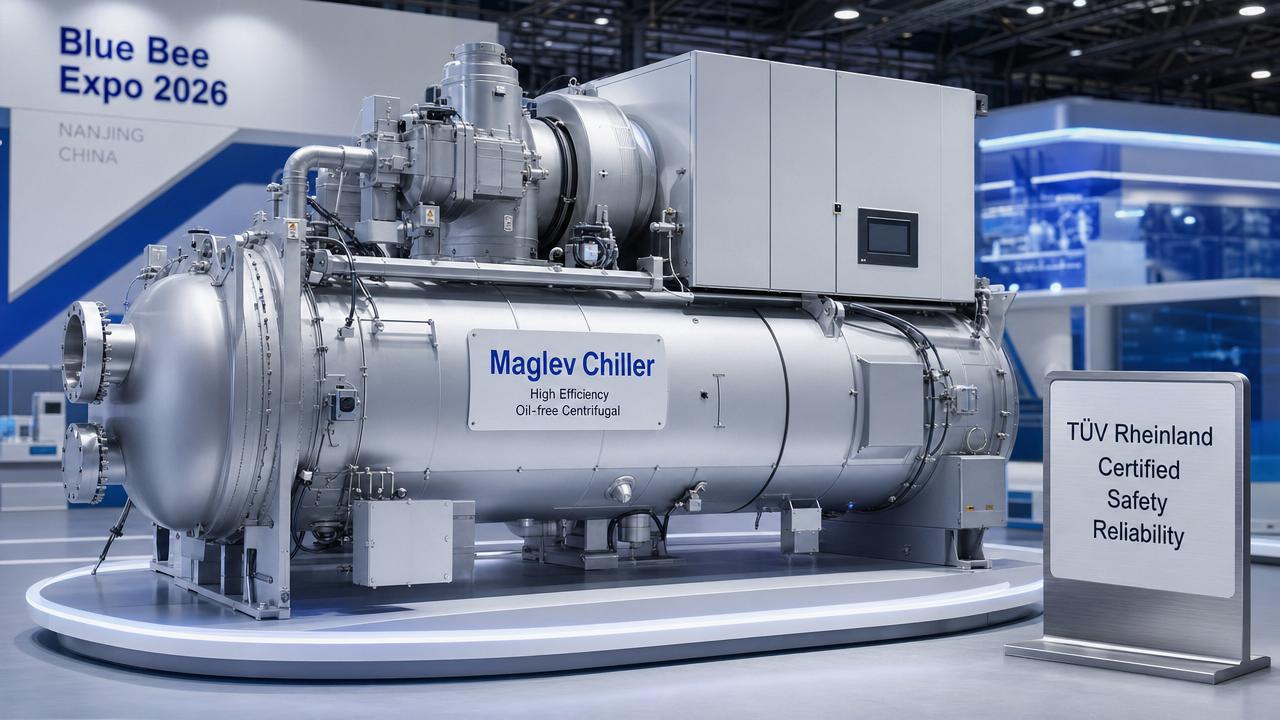
The sixth China International Clean Technology & Green Energy Expo (Blue Bee Expo) concluded in Nanjing on May 25, 2026. The event marked a significant inflection point for export-oriented precision HVAC manufacturers, driven by new technical commitments and surging international demand for magnetically levitated centrifugal chillers (Maglev Chillers) — particularly amid tightening energy-efficiency expectations in regulated end-use sectors.
Key Facts from the Blue Bee Expo
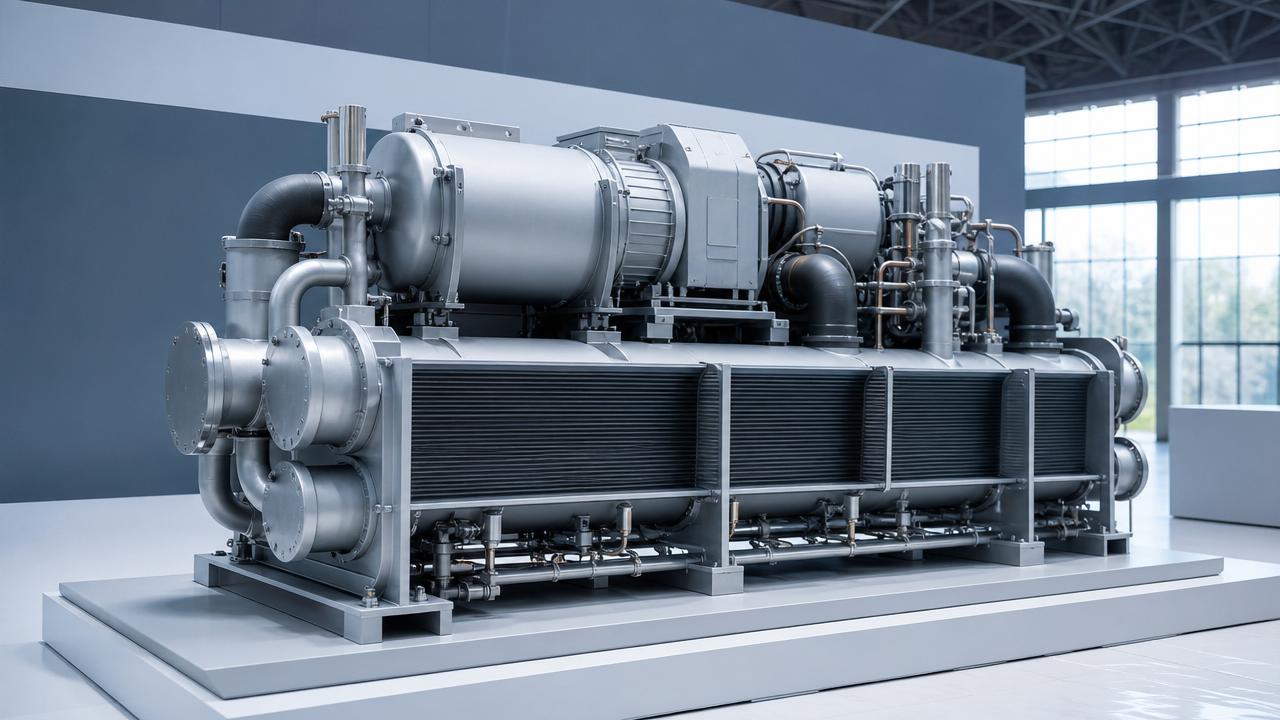
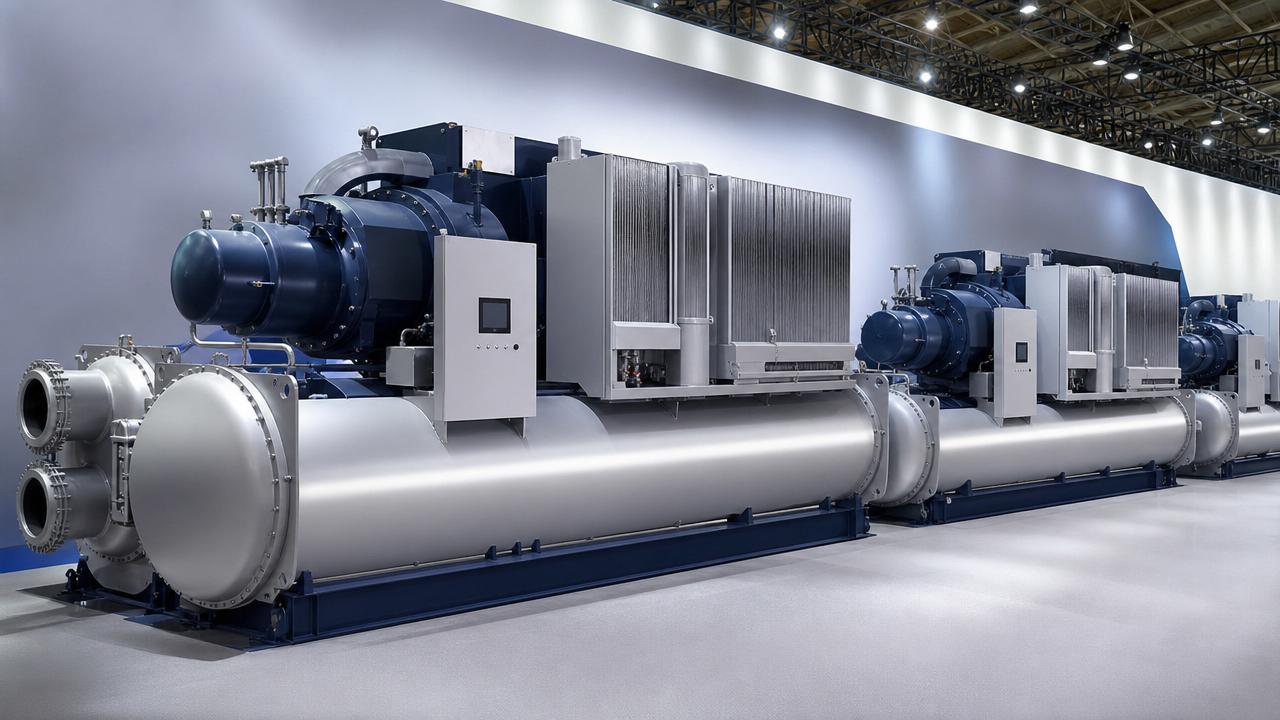
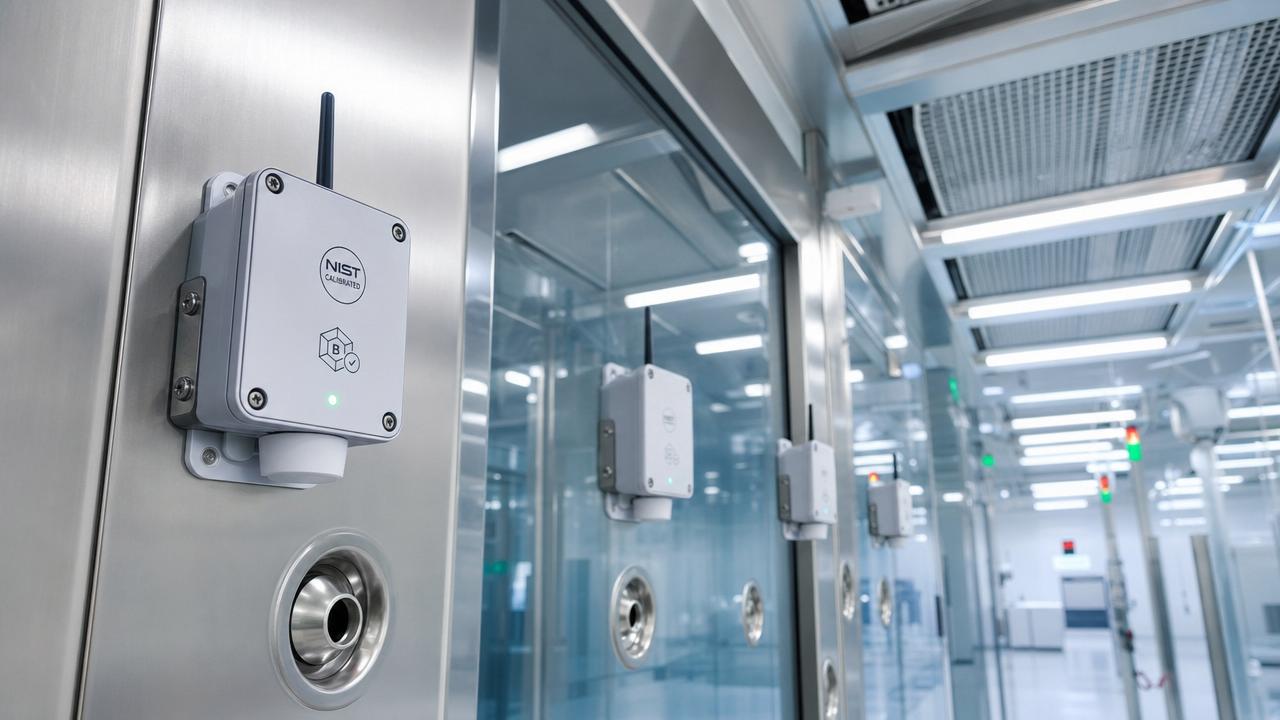
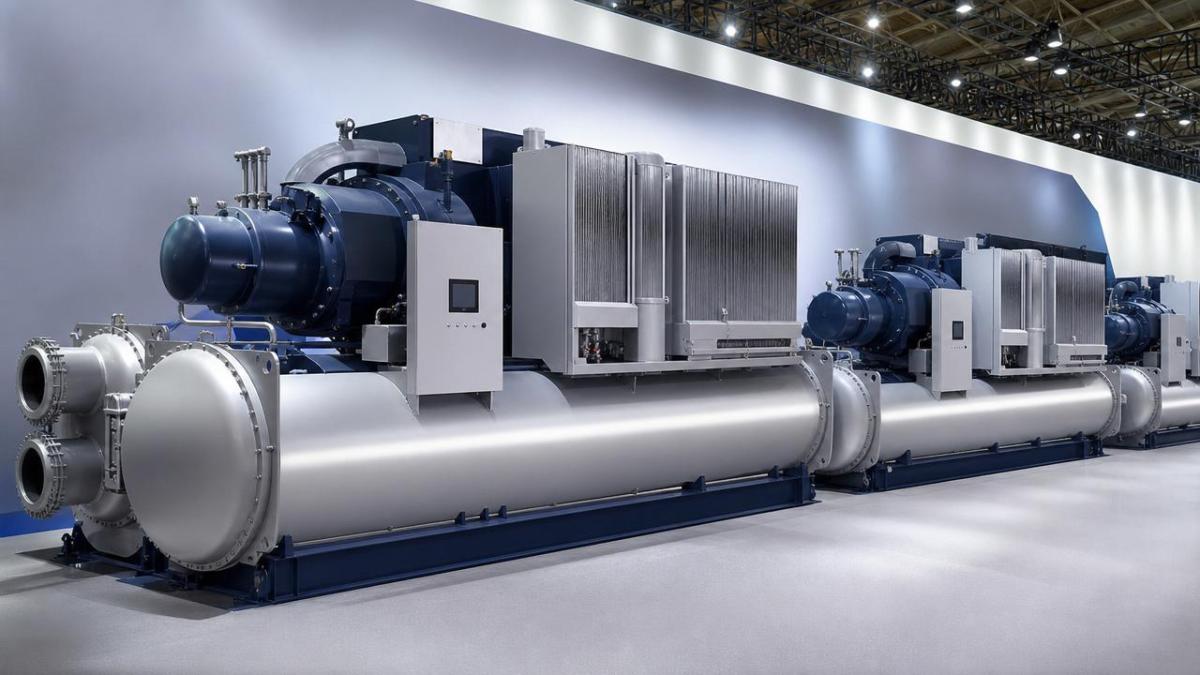
On May 25, 2026, the sixth edition of the Blue Bee Expo closed in Nanjing. Data released during the event showed that Maglev Chillers — Precision HVAC systems equipped with magnetic levitation centrifugal compressors — secured US$1.78 billion in overseas letters of intent, representing a 210% year-on-year increase. Top destination markets were Germany (38%), Vietnam (22%), and Mexico (15%). Concurrently, three leading Chinese manufacturers jointly issued the Maglev Chiller Export Energy Efficiency Consistency Statement, pledging that all product variants maintain ΔT accuracy within ±0.01°C across wide-temperature operating conditions (–15°C to +45°C), directly addressing critical performance requirements from European pharmaceutical facilities and Southeast Asian IDM (Integrated Device Manufacturer) cleanrooms.
Impacts Across the Supply Chain
Export-oriented trading enterprises
These firms face intensified pre-shipment verification demands, especially regarding documented thermal stability under non-standard ambient conditions. The ±0.01°C ΔT guarantee implies stricter factory acceptance testing (FAT) protocols and tighter alignment with EU GMP Annex 1 and ASEAN cleanroom standards — affecting quotation lead times and contractual liability clauses.
Raw material procurement enterprises
Suppliers of high-precision temperature sensors, low-loss magnetic bearing controllers, and ultra-stable refrigerant charge components may see accelerated qualification timelines. Compliance with the declared tolerance band requires traceable calibration chains and component-level test reports aligned to IEC 60068-3 series environmental testing standards.
Manufacturing enterprises
Production lines must now validate operational consistency across the full –15°C to +45°C range — not just at nominal conditions. This extends validation cycles and increases reliance on climate-controlled test chambers meeting ISO 16000-23 and ASHRAE 111 requirements.
Supply chain service providers
Third-party certification bodies, logistics partners handling temperature-sensitive commissioning kits, and after-sales technical support networks must adapt documentation workflows to reflect the declared wide-temperature ΔT compliance — including updated service manuals, spare-part traceability logs, and remote diagnostics calibration certificates.
Strategic Priorities for Enterprises
Align technical bids with the new consistency commitment
Tenders referencing EU pharmaceutical HVAC specifications or ASEAN semiconductor fab requirements must now explicitly cite adherence to the ±0.01°C ΔT tolerance under stated operating conditions — not just nominal ratings. Bid documents should include verified test summaries per IEC 61800-9-2 (energy efficiency in variable-speed drives) and EN 14511 (chiller performance testing).
Review supplier qualification for wide-temperature validation capability
Sub-tier suppliers — especially those providing magnetic bearing assemblies, microprocessor-based control boards, and refrigerant management valves — must demonstrate validated performance across the full –15°C to +45°C envelope. Audits should verify chamber calibration records, sensor uncertainty budgets, and long-term drift test data.
Update export documentation and compliance dossiers
Certification packages for CE, NOM-Mexico, and Vietnam’s CR marking must now incorporate evidence of ΔT stability testing at extreme endpoints. Technical files should reference test reports compliant with ISO/IEC 17025 and include uncertainty analysis per GUM (Guide to the Expression of Uncertainty in Measurement).
Strengthen post-delivery performance monitoring frameworks
To uphold the declared consistency promise, manufacturers must deploy remote monitoring solutions capable of logging real-time ΔT deviations with timestamped, tamper-evident audit trails — supporting both warranty claims and regulatory audits in high-compliance jurisdictions.
Industry Perspective: Beyond the Headline Growth
Analysis shows that the 210% order growth reflects more than cyclical demand — it signals a structural shift toward performance-based procurement in regulated industries. What deserves closer attention is how the joint declaration redefines minimum technical thresholds: rather than focusing solely on COP or SEER at standard conditions, buyers now treat thermal stability across ambient extremes as a non-negotiable functional requirement. From an industry perspective, this raises the bar for supply-chain maturity — especially in calibration traceability, test infrastructure investment, and cross-border technical documentation harmonization. Observably, the move also accelerates convergence between HVAC performance validation and semiconductor-grade metrology practices.
What This Means for the Sector
This event underscores a maturing export ecosystem where technical credibility — demonstrated through verifiable, condition-specific performance commitments — increasingly outweighs price competitiveness alone. It does not guarantee sustained growth, but it does establish a new benchmark for market access in high-value, compliance-sensitive verticals. Stakeholders should view this not as a one-off commercial milestone, but as an early indicator of evolving global expectations for precision thermal control systems.
Source Attribution
This article was generated exclusively from the user-provided title, event date (May 25, 2026), and event summary. Specific official source links were not provided in the input and should be verified continuously. Ongoing monitoring is recommended for updates on implementation guidance from national metrology institutes, revisions to EN 14511 annexes, tender language evolution in EU pharmaceutical procurement portals, and feedback from ASEAN cleanroom associations regarding adoption of the consistency statement.
Get weekly intelligence in your inbox.
No noise. No sponsored content. Pure intelligence.
 Jun 01, 2026Market Intelligence Reports: Signals That Support 2026 Expansion PlansMarket Intelligence Reports reveal the technical, regulatory, and ESG signals leaders need to plan resilient 2026 expansions with lower risk and stronger ROI.
 Jun 01, 2026Matter Compatible Devices: Setup Risks in Mixed Smart HomesMatter compatible devices can simplify mixed smart homes, but setup risks remain. Learn how to avoid pairing issues, network gaps, feature limits, and automation conflicts.
 Jun 01, 2026USB C Docking Stations: Power Delivery Limits to Check FirstUSB C docking stations can make or break workstation stability. Learn the key power delivery limits to check before buying for safer, smoother daily operation.
 Jun 01, 2026Healthcare Analytics in 2026: Data Quality Checks Before DeploymentHealthcare Analytics in 2026 demands trusted data before deployment. Learn key quality checks for completeness, traceability, compliance, and safer go-live decisions.
 Jun 01, 2026OEM Machined Parts: Tolerance Risks That Raise Assembly CostsOEMmachinedparts tolerance risks can drive rework, delays, and hidden assembly costs. Learn how to control specs, suppliers, and sourcing decisions.
 Jun 01, 2026China Excludes UPW Regeneration Modules from Hazardous Waste RulesChina exempts UPW regeneration modules from hazardous waste rules—key update for semiconductor suppliers, fabs & logistics firms. Learn implications & compliance steps.
 Jun 01, 2026Blue Bee Expo 2026: Maglev Chiller Export Orders Surge 210%; ±0.01°C Control Now Key EU/US Procurement CriterionBlue Bee Expo 2026: Maglev chiller export orders surge 210%; ±0.01°C control & Digital Twin validation now mandatory for EU/US tenders.
 Jun 01, 2026ECHA Updates SCIP Rules: AMC Filtration Exporters Must Disclose Regeneration ParametersAMC filtration exporters must now disclose adsorbent regeneration parameters in SCIP submissions—key for EU compliance. Act before 1 July 2026.
 Jun 01, 2026IEC Revises IEC 60335-2-102: New Mandatory Real-Time Calibration for IIoT Air Monitoring in Class 1–9 SystemsIEC 60335-2-102 revision mandates real-time IIoT air monitoring calibration for Class 1–9 cleanroom systems—act now to ensure compliance, certification & market access.
 Jun 01, 2026FDA Tightens Import Rules for BSL-3/4 Decon SystemsFDA tightens import rules for BSL-3/4 decon systems: Full-cycle biological validation now mandatory for U.S. market access—act before May 30, 2026.
 May 31, 2026Corrugated Plastic Boxes for Retail Packaging: When to Use ThemCorrugated plastic boxes for retail packaging offer durable, reusable, moisture-resistant solutions. Learn when they outperform cartons and how to choose the right design.
 May 31, 2026OEM Machined Parts: Tolerance Risks to CheckOEM machined parts can hide tolerance risks that cause leaks, vibration, contamination, or compliance issues. Learn key checks before supplier approval.
 May 31, 2026Solar Panels Wholesale Cost Guide 2026Solar panels wholesale cost guide for 2026: compare pricing, landed costs, certifications, and supplier risks to buy smarter and protect long-term ROI.
 May 31, 2026Medical Grade Silicone: Key Safety ChecksMedical grade silicone safety checks for QC teams: verify compliance, traceability, compatibility, and performance to reduce contamination risk and downtime.
 May 31, 2026How to Size Fan Filter Units for ISO CleanroomsFan Filter Units sizing guide for ISO cleanrooms: learn how to balance airflow, coverage, pressure, heat load, and energy cost for reliable contamination control.
 May 31, 2026Blue Bee Expo Nanjing 2026 Closes: Maglev Chillers See 210% Overseas Order GrowthMaglev chillers drive 210% overseas order growth at Blue Bee Expo Nanjing 2026 — discover how ±0.01°C precision & ASHRAE 188-2024 Annex J compliance are reshaping global HVAC procurement.
 May 31, 2026FDA Updates BSL-3/4 Lab Equipment Import Rules for Decon SystemsFDA updates BSL-3/4 lab equipment import rules for decon systems—new VHP/GHP validation requirements take effect immediately. Act now to avoid shipment delays.
 May 31, 2026IEC Launches Revision of ISO Class 1–9 Cleanroom Standards with IIoT Air Monitoring Calibration RequirementIEC mandates IIoT air monitoring calibration for ISO Class 1–9 cleanrooms—key for pharma, semiconductor & biotech exporters. Act now to align with 2027 enforcement.
 May 31, 2026China Excludes UPW Resin Modules from Hazardous Waste RulesUPW resin modules now exempt from China’s hazardous waste rules—boosting export efficiency for semiconductor, pharma & electronics firms. Key update for global supply chains.
 May 31, 2026EU Adds DBDPE to SVHC Candidate List: AMC Filtration Exporters Must Update SDS and SCIPEU adds DBDPE to SVHC list—AMC filtration exporters must update SDS & submit SCIP notifications by 5 May 2026. Act now to avoid delays, audits, and lost tenders.
 May 30, 2026Industrial HVAC Tender Alerts: What to Track in 2026industrial hvac tender alerts in 2026 reveal project signals, compliance risks, and market opportunities—learn what to track to bid smarter and plan ahead.
 May 30, 2026Wireless EV Charging: Efficiency Losses ExplainedWireless EV charging efficiency losses explained: compare plug-in systems, key loss points, cost impacts, and procurement tips for smarter fleet decisions.
 May 30, 2026Solar Panels Wholesale USA: Price vs Warranty ChecksSolar panels wholesale USA buyers: learn how to compare price, warranty, supplier stability, landed cost, and documents to protect margins and buy with confidence.
 May 30, 20265 Axis Milling Cost Drivers to Check Before Quoting5 axis milling costs depend on material, tolerances, finish, inspection, and volume. Learn what to check before quoting to reduce risk and secure better value.
 May 30, 2026Surgical Instruments: Cleaning Risks Before SterilizationSurgical instruments cleaning risks before sterilization: uncover hidden residues, biofilms, water quality issues, and control steps that protect safety and audit readiness.
 May 30, 20262026 Blue Bee Expo Closes in Nanjing: Maglev Chillers’ Overseas Orders Surge 210%Maglev Chillers surge 210% in overseas orders at 2026 Blue Bee Expo Nanjing — discover how precision thermal stability is reshaping global HVAC procurement.
 May 30, 2026IEC Launches Global Revision of Cleanroom Standards with IIoT Air Monitoring Calibration RequirementIEC’s new cleanroom standards mandate IIoT air monitoring calibration—NIST-traceable, blockchain-verified, ≤72h intervals. Critical for semiconductor, biopharma & medtech.